Man and van in Tufnell Park

We provide man and van in Tufnell Park for straightforward moves, single-item transport and practical loading help when you need a smaller, flexible removals service. The work suits people moving from flats, converting rooms, student accommodation or compact offices, as well as anyone who wants careful handling without booking a larger vehicle than the job requires. Our service is built around sensible planning, tidy loading and clear communication from the first enquiry through to completion.
For customers comparing options, our man and van service covers the core approach in more detail, while the broader removal services page sets out how different moving jobs can be organised. We can help with furniture, boxes, appliances and mixed household contents, provided the items are suitable for safe manual handling and vehicle transport. The focus is on a practical move, not a one-size-fits-all package, so the scope is planned around what actually needs to go.
A sensible quote starts with the size of the load, the collection and delivery details, access at each end and any handling considerations such as stairs, awkward corners or fragile items. If you already know the main items, it helps to group them by room or type. Simple information is usually enough to begin a useful estimate, and if you are ready to take the next step, you can ask for a quotation in plain language without having to oversell the job.
Household moves carried out with a compact vehicle

Many local customers use a man and van for household moving because it offers a simpler setup than a full removals crew. It works well where the load is modest, the route is direct and the main priority is getting belongings moved without unnecessary complication. The service can suit beds, tables, chairs, white goods, storage units, bags and packed boxes when these can be loaded safely and secured properly for the journey.
If your move is for a flat, shared property or a smaller house, the benefit is usually flexibility. The van can be matched to the contents, and the work can be organised to suit collection, delivery or both. For fuller home relocation arrangements, the home moves page explains a wider domestic moving option, while house removals is useful where the job is more substantial. We keep the emphasis on choosing the right scale of service rather than adding unnecessary extras.
It is often useful to think about what should travel together and what needs extra care. Furniture with removable legs, mirrors, disassembled frames and boxed personal items are usually easier to load when they are prepared in advance. If you have several awkward pieces, make a note of them early so the arrangement is set up with adequate space and the right handling method. That makes the move smoother for everyone involved.
Single items, furniture and local collection work

Not every booking is a full move. Some customers only need one item collected, delivered or shifted between addresses, and a man and van is often the simplest way to do that. Sofas, wardrobes, desks, exercise equipment and boxed household items can all be moved in this way when the dimensions and weight are suitable. The same applies to buying or selling second-hand furniture, where reliable transport matters more than a large-scale removals operation.
For this kind of work, clear descriptions are helpful. The furniture pick-up page reflects that type of task, while moving van is relevant when a vehicle-based move is the main requirement. The job may be a one-off collection from a shop, a private home or a storage location, followed by delivery to another address. Good packing and safe lifting remain important even for short journeys, because damage usually happens during handling rather than on the road.
When a single item is unusually bulky, it is worth checking access as well as size. Narrow hallways, tight staircases and limited parking can affect how the item is moved from one property to another. In those cases, a little extra preparation can prevent avoidable delays. If the item needs to stay upright, be protected from scratches or be separated from other contents, that should be noted when you ask for the quote.
Packing support and practical loading decisions
Some customers want the transport arranged first and the packing handled separately. That is where a flexible moving service can be helpful, especially if boxes have not yet been completed or furniture needs protection before loading. We can work with packed items, loose pieces that have been prepared for transport and mixed loads that need orderly stacking. The aim is to keep the contents stable and make the journey as efficient as possible.
Related support is outlined on the packing and unpacking services page, which is useful if you want to separate the preparation stage from the move itself. For jobs where the vehicle, route and loading order matter most, the moving truck page gives another way to think about transport capacity. Not every move needs every service, so the best arrangement is the one that matches the actual contents and the amount of work involved.
Before moving day, it helps to keep a short checklist: fragile items identified, loose parts taped together, pathways kept clear and any access restrictions mentioned in advance. These are not complicated requirements, but they do make the work more orderly. If you are comparing possibilities, it is often enough to decide whether you need transport only, transport plus loading help, or a fuller moving arrangement with packing support.
What affects the quotation

The quotation for a man and van service is usually shaped by a small number of practical factors rather than a fixed template. Distance, volume, access and handling time all matter, as do any special conditions such as heavier items, disassembly, waiting time or multiple stops. A clear description of the contents helps keep the estimate realistic, because the job can be priced more accurately when the mover knows what is actually being carried.
Useful details usually include the number of rooms involved, whether the property has stairs or lift access, and whether the items are already boxed or still loose. If you are arranging a move between several addresses, it also helps to say so early, because a multi-stop route can be planned differently from a simple point-to-point transfer. Pricing and quotes explains the general approach to estimating jobs, while contact us is the natural next step when you want to outline the move in your own words.
It is perfectly reasonable to ask for a quotation before deciding on the date. A brief list of items, combined with the start and end locations, is often enough to begin. If you are unsure whether a piece can be moved safely, mention its size, material or condition and include anything that could affect lifting or loading. That information helps avoid last-minute surprises and keeps the plan practical.
Office and small business transport
Man and van work is not limited to domestic moves. It can also support small business transport where the items are compact, time-sensitive or spread across a limited number of workstations. Desks, chairs, archived boxes, display items, files and light equipment can often be moved without the complexity of a full-scale office relocation. The advantage is that the service can be scaled to what the business actually needs, rather than treated as a large corporate project.
For fuller commercial arrangements, see office relocation services or the broader commercial moves page. Those pages are relevant when a workplace move involves more planning, more items or a more structured transfer between sites. Where the requirement is simpler, a man and van can be a sensible middle ground: enough support to move things properly, but still practical for smaller premises or limited volumes.
Office items often need a little extra care because paperwork, tech accessories and fittings can be mixed together. Grouping like items, labelling boxes and separating fragile equipment from general contents can help the move stay orderly. If there are items that should not be stacked, or pieces that need to remain upright, those points should be mentioned clearly in the enquiry so the load can be arranged accordingly.
About Tufnell Park

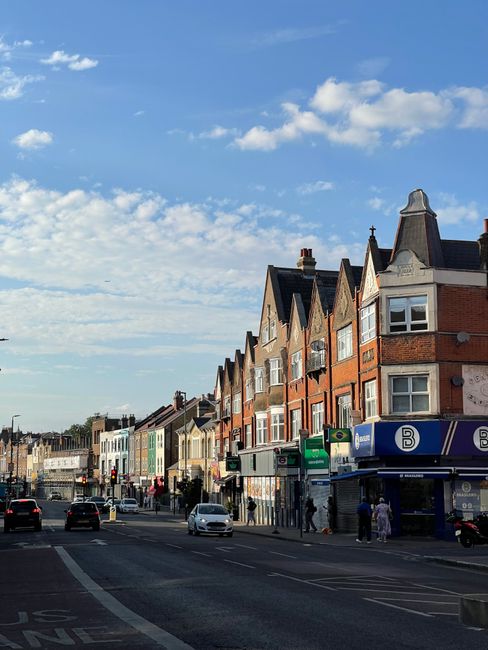
Tufnell Park is an area of north London spread across parts of the London Borough of Islington and the London Borough of Camden. The name is used for a neighbourhood with a strong residential character rather than a single formally bounded district, and its identity is closely linked to the development of north London during the nineteenth century. The area takes its name from the Tufnell family, who owned land there, and it later became known for terraces, converted houses and streets that reflect Victorian and Edwardian suburban growth. The underground station that carries the name sits on the Northern line, giving the area a clear transport landmark as well as a familiar local reference point.
The streets around Tufnell Park include a mix of residential architecture, from larger period houses to smaller terraces and mansion blocks, with many roads laid out in the pattern typical of London’s nineteenth-century expansion. Nearby, Kentish Town, Gospel Oak and Holloway help frame the district within a wider urban setting, while the local road network links it to Camden and Islington more broadly. The area is also connected to local green spaces and walks, with Parliament Hill and Hampstead Heath close by to the north-west, adding open land to an otherwise built-up part of the city. Community life in the district is shaped by its everyday residential use, local shops and the movement of people through and around the station, creating a place that feels urban, settled and well connected.
Planning the move sensibly
A successful booking often depends on how well the move has been thought through before loading begins. That does not mean complicated preparation; it usually means deciding what is going, what stays behind and whether anything needs to be separated for access or safety reasons. When people prepare early, the job is easier to estimate and the vehicle can be matched to the contents more accurately.
If you are comparing the practical options, the man with a van and man with van removal pages may help you judge the phrasing and scope of similar services. They are useful where the main need is still transport and loading support rather than a large-scale removal package. Keep the brief focused: what is being moved, where it is going and whether there are any access considerations. That is usually the core of a helpful enquiry.
Because every move is different, it is sensible to think about priority items first. Anything that is fragile, valuable or awkward should be identified early so it can be loaded carefully and placed where it is least likely to shift. If there are items that need dismantling before travel, note that too. A concise explanation now often saves time later and helps the move run in a more controlled way.
Related removal options when the job is larger
Sometimes the right choice is still a man and van, but sometimes the contents are better suited to a more complete removal arrangement. That can happen when the property is larger, the number of items is greater or the move needs more formal planning. In those cases, it is useful to compare the service with broader removal pages so you can decide what level of support is appropriate before committing to a date.
The removals page gives a general overview of moving work, while house movers and house removalists reflect domestic moving language that some customers prefer. If you want to explore how the company groups related services, the removal company page can also be useful. Choosing the best fit matters because the most efficient move is the one that matches the scale of the job, rather than trying to force every booking into the same format.
Once the contents become more complex, it helps to separate core furniture, boxes and specialist items before requesting a price. Even if the job remains relatively small, that outline makes it easier to judge whether the move needs a van-only solution or something broader. If you are still deciding, it is usually fine to describe the job in broad terms first and refine the details afterwards.
Preparing useful details for a quotation
When asking for a quote, a short and accurate description usually works better than a long vague one. Mention the addresses involved, the main items, any access issues and whether you need loading help at both ends. If items are already packed, say so; if not, say that too. That sort of information helps the estimate reflect the actual work, rather than relying on guesswork or unnecessary assumptions.
You do not need a perfect inventory to begin, but a simple list can make the process easier. It is especially helpful for awkward furniture, appliances, dismantled pieces and anything that must be handled carefully. If you want to compare approaches, the removal van and removal services pages set out broader transport options, while this service remains focused on practical, manageable moves. A well described job is usually easier to organise and easier to price fairly.
For a straightforward response, keep the request direct: what needs moving, where it is going and when you would like it done. If there are limitations, mention them early rather than leaving them until later in the conversation. That applies whether the move is domestic, commercial or simply a single delivery. Clear details save time on both sides and make the next step much easier to arrange.
Choose the level of support that fits the job
Not every customer needs the same level of help, which is why a man and van service is often chosen for its flexibility. Some bookings only need transport; others benefit from loading support, careful placement and a little extra coordination. The point is to match the service to the job rather than adding unnecessary complexity. That keeps the move practical and helps avoid paying for capacity that will not be used.
If you want to compare service language, the movers page and moving van page are useful references for related transport-led work. Where the move includes several pieces of furniture, boxes and a clear route between properties, a concise plan is usually enough. If you have already decided that this is the right option, the final step is simply to ask for a quotation with the main details included. You can request a quotation whenever you are ready.
Good moving work is often about clarity rather than complexity. Once the contents, access and destination are known, the rest of the arrangement can be kept simple and workable. That makes the service suitable for people who want practical help without a drawn-out process, and it gives a straightforward way to move belongings with care. Tell us what needs moving, and we can take it from there.